Pelvis Lateral Acceleration
Overview
Pelvic lateral acceleration refers to the side-to-side acceleration experienced at the center of the pelvis during a car crash. High pelvic lateral acceleration may result in injuries such as pelvic fractures, internal bleeding, or lumbar spine damage [1]. Additionally, if an Injury Assessment Reference Value (IARV) is associated with the Anthropomorphic Test Device (ATD) used in the selected load test, the calculated maximum lateral acceleration will be reported as a percentage of the IARV [2]. The IARV represents a threshold value used to assess the risk of injury during an impact. Each ATD has its own IARV, which varies depending on the type, sex, and size of the dummy [2].
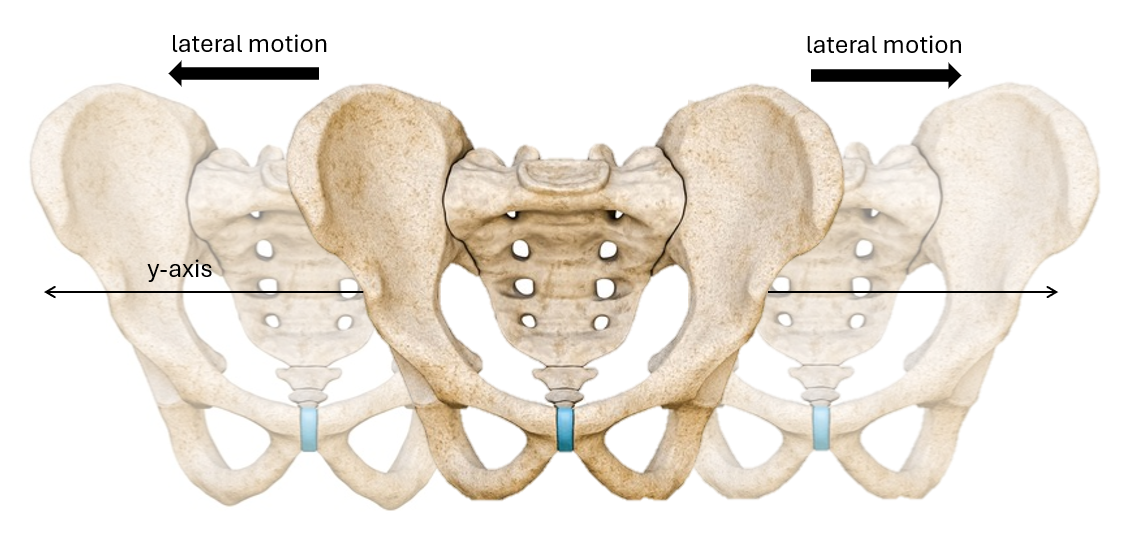
Required Signals
- Acceleration at the Pelvis Center (Y)
Calculation
- Convert the pelvis acceleration to gravity (g) (if applicable)
- Filter the pelvis acceleration (CFC = 600)
- Calculates the maximum filtered pelvis acceleration
- Calculates the percent of the IARV threshold the calculated maximum pelvis acceleration reaches
References
[1] AlTurki AA, AlAqeely KS, AlMugren TS, AlZimami IS. Analysis of femoral fracture post motor vehicle accidents. Saudi Med J. 2019 Jan;40(1):41-44.
[2] "Frontal Offset Crashworthiness Evaluation". Guidelines for Rating Injury Measures, Insurance Institute for Highway Safety, June 2009.
[3] Federal Motor Vehicle Safety Standard 49 CFR § 571.214; Side impact protection.