Iliac Wing Force
Overview
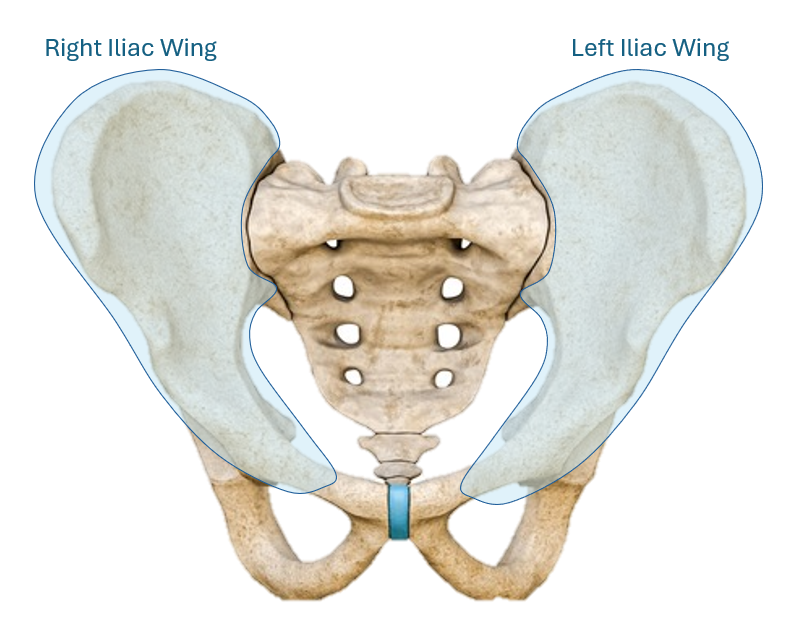
Lateral force measured at the iliac wing represents the forces applied to the sides of the iliac wing, a common contact point in side impacts [1]. Large forces applied laterally to the iliac wing can result in pelvic fractures, soft tissue injuries, and an increased likelihood of internal organ injuries (especially in the lower abdomen) [1]. Additionally, if there is an Injury Assessment Reference Value (IARV) associated with the ATD used in the selected load test, the calculated maximum lateral force will be reported as a percentage of the IARV [2]. Each ATD has its own IARV, which varies depending on the type, sex, and size of the dummy [2].
Required Signals
- Force at the Iliac (Y)
Calculation
- Convert iliac force to newtons (N) (if applicable)
- Filters the iliac force signal (CFC = 600)
- Calculate the maximum filtered force
- Calculates the percent of the IARV threshold that the maximum filtered iliac force reaches
References
[1] Lambrecht D, Van Oost J. Bilateral Symmetric Fracture of the Iliac Wings: An Unusual Situation after a Car Accident. Case Rep Orthop. 2019 Oct 20;2019:7942904.
[2] "Side Impact Crashworthiness Evaluation". Guidelines for Rating Injury Measures (Version III), Insurance Institute for Highway Safety, May 2014.
[3] Kuppa S. "Injury Criteria for Side Impact Dummies". National Highway Traffic Safety Administration, January 2006.